
Space repositioning · Social clubs
Could a social club work in a small downtown?
We’re exploring how a membership-based gathering place could meet a local need and give underused commercial space a different purpose.
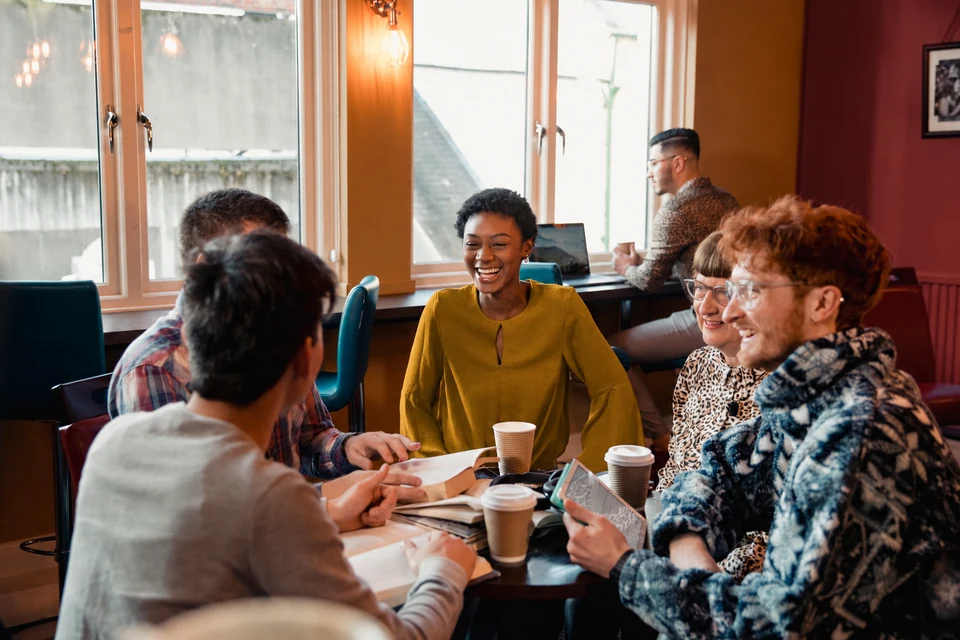
A downtown can have places to eat, shop, and work, yet still lack somewhere people want to return to simply to spend time together.
At Causeway, we’re considering whether a social club could fill that gap. Our early concepts and preliminary business planning explore a straightforward idea: a welcoming place organized around a particular audience, supported by recurring membership revenue, and designed to give people a reason to keep coming back.
For a developer or property owner, that raises an interesting question. Could a space that struggles to attract a conventional tenant support a business built around gathering?
An established idea is finding different forms
A social club is a membership-based place where people gather around shared interests, activities, or experiences. The offer might include comfortable lounges, events, meeting space, food and drink, or activities for families.
The model has a long history. The Athenaeum, founded in 1824, brought people together around literature, science, and the arts. Today’s concepts are adapting the membership idea to different routines and audiences. 1
CoStar reported in February 2025 that Common Desk founder Nick Clark and former business partner Dawson Williams had purchased an aging medical office property for a proposed family-focused club. Their plans emphasized children’s play, family amenities, and a pool, rather than a golf course. The project illustrates how an existing building can be reconsidered around a specific group’s needs. 2
Birch Road takes a different approach. Its neighborhood clubhouses give members space to host friends, store their own beverages, attend events, and use meeting rooms. Members bring their own drinks, while the club provides the setting and supporting amenities. 3
These are different businesses with different costs. What makes them useful references is the clarity of the offer: each gives a defined audience a reason to join.
Begin with what the town already offers
Before designing a club, we would look at how people already spend their time. Are there country clubs nearby? What do they cost, who uses them, and which activities do they offer? Are there restaurants, recreation centers, libraries, or community organizations meeting similar needs?
An existing country club might serve its members well while leaving room for a more convenient downtown option, a different price point, or a different focus. Equally, the absence of a country club does not establish demand for a new one. The useful question is what people want that their current options do not provide.
A small-town club would need its own case for membership, supported by people close enough to use it regularly and willing to pay for the experience. A well-attended opening would be encouraging. Renewals would tell us more.
Give people a clear reason to belong
We would begin with a theme and a recognizable audience. That could mean a family clubhouse built around time together, a food-and-wine club for people who enjoy hosting, or a gathering place centered on books, games, music, or the arts.
The theme should influence the layout, calendar, amenities, and membership offer. A family concept needs to work for both adults and children. A listening club needs careful attention to sound. A hosting-focused club needs comfortable group seating and a practical way for members to bring guests.
The weekly experience matters as much as the opening design. Recurring activities, thoughtful introductions, and reliable hospitality give members reasons to build the club into their routines. A beautiful room helps; someone still needs to make it a place people enjoy using.
Test the business and the space together
For a smaller downtown, we would put several questions in front of the project team early:
- Who would join first? Speak with prospective members about what they would use, how often they would visit, and what they would pay. Test the response through small events or a founding-member interest campaign before committing to a full conversion.
- What does membership include? Define access, guests, reservations, events, and any additional charges. The offer needs to be easy to understand and practical to deliver.
- Who will operate it? A club needs someone responsible for member relationships, programming, upkeep, and daily service. An owner considering a club as a tenant should assess the operator’s plan and ability to sustain rent. An owner operating the club directly takes on the membership business as well.
- What can the building support? Consider access, bathrooms, acoustics, capacity, and the relationship with neighboring uses. Food service, alcohol, supervised children’s activities, or a pool each adds questions to resolve with the appropriate specialists.
- How many members does the business need? Compare recurring dues and other realistic income with rent, staffing, utilities, cleaning, programming, and fit-out costs. Test a slower opening and member cancellations alongside the preferred scenario.
- Will members feel they are getting value? Membership needs to support the business while preserving the experience people are paying for. Crowded rooms, unavailable amenities, or a thin events calendar can weaken the reason to renew.
A different possibility for underused space
A social club could give an underused office, upper floor, or former retail space a new leasing proposition. Its appeal would depend on the fit between the audience, the building, and the operating model. A modest clubhouse with a focused offer may be a more appropriate starting point than an extensive package of amenities.
Our preliminary business planning and early design concepts suggest this is an option worth a developer considering. The opportunity is to connect a property with an unmet local need and an operator capable of serving it.
For some small downtowns, that could mean a new reason for people to spend time there—and a worthwhile use for space that has been difficult to lease.
Research and references
- The Athenaeum: Our history · Founding and original purpose.
- CoStar: Common Desk founder’s proposed family-focused club · Candace Carlisle, February 27, 2025. Referenced as a proposal reported at that time.
- Birch Road: Membership details · Operator’s description of the clubhouse experience.
Sources reviewed October 30, 2026.